CFAC ALUMNI
WHERE ARE THEY NOW?
Louisville Visual Art exists to support artists at every stage of their creative lives. From a child’s first Children’s Fine Art Class to adult figure drawing, from public art commissions to gallery exhibitions where 100% of sales go directly to the artist, LVA meets people wherever they are on their creative journey, and stays with them.
Art has a way of shaping a life long after the class ends. That’s the idea behind this year's Give for Good campaign theme, Where Are They Now? We’re revisiting CFAC alumni decades later to see where that first class led them: into studios, classrooms, hospitals, and careers no one could have predicted. But CFAC is really just the beginning of the story. LVA continues supporting artists well into adulthood, through professional development, public exhibitions, and a citywide creative community that includes generations of Louisville artists.
Your support makes these stories possible. Donations help keep CFAC classes tuition free, giving young artists access to meaningful arts education regardless of their family’s financial circumstances. When you give to LVA, you are investing in the next generation of Louisville’s creative community.
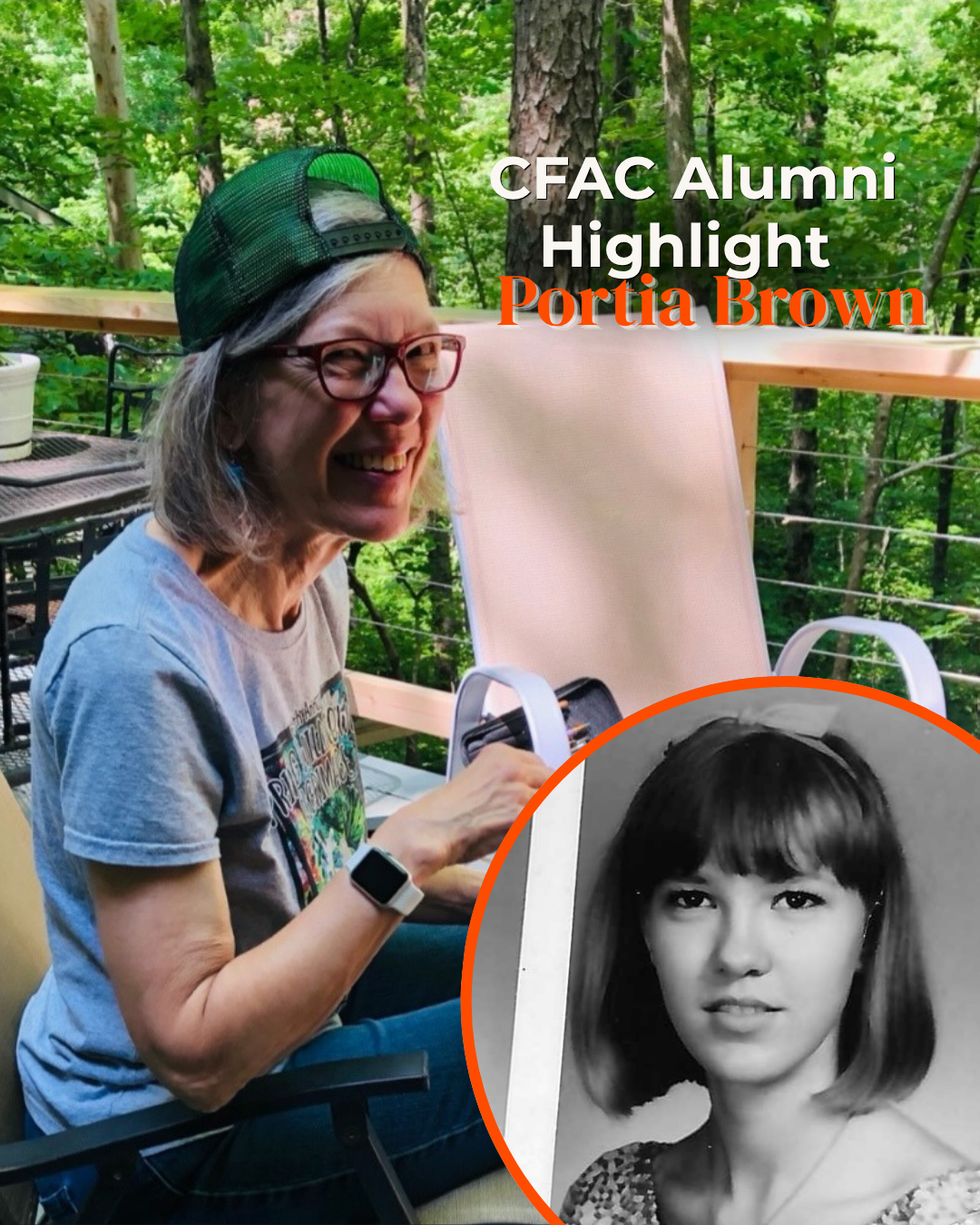
Portia Brown
Portia began attending Children’s Fine Art Classes around 1955, when she was about seven years old, at a building on Brandeis Street. The room had big wooden, adjustable easels, a step up from a school desk or a breakfast table at home, and Saturday mornings quickly became something to look forward to.
Her teacher, Mary Walker Bernard, didn’t hesitate to raise her voice to keep the class in line, but she also instilled a sense of wonder and possibility in her students. Portia remembers field trips to the Speed Museum, especially the Native American exhibits, and the comfort of being around other kids from across the city rather than just her own neighborhood school.
That early training in seeing things differently stayed with Portia well beyond CFAC. Later, in a small painting class with Mary Spencer Nay at the University of Louisville, she found another close knit community, one that gathered outside of class to share ideas and critique each other’s work.
Portia didn’t build a career in art. Instead, life took her through graduate study at the University of Florida, an internship with a residential architect in Atlanta, and decades of work in social work, nonprofit administration, and native landscaping. But art never left. It became something more personal, a language of her own.
Now largely retired, Portia is looking forward to spending more time enjoying making visual art.
“Drawing became my own private language for reflecting on life and processing everything from my emotions to ideas for making something better.” -Portia Brown
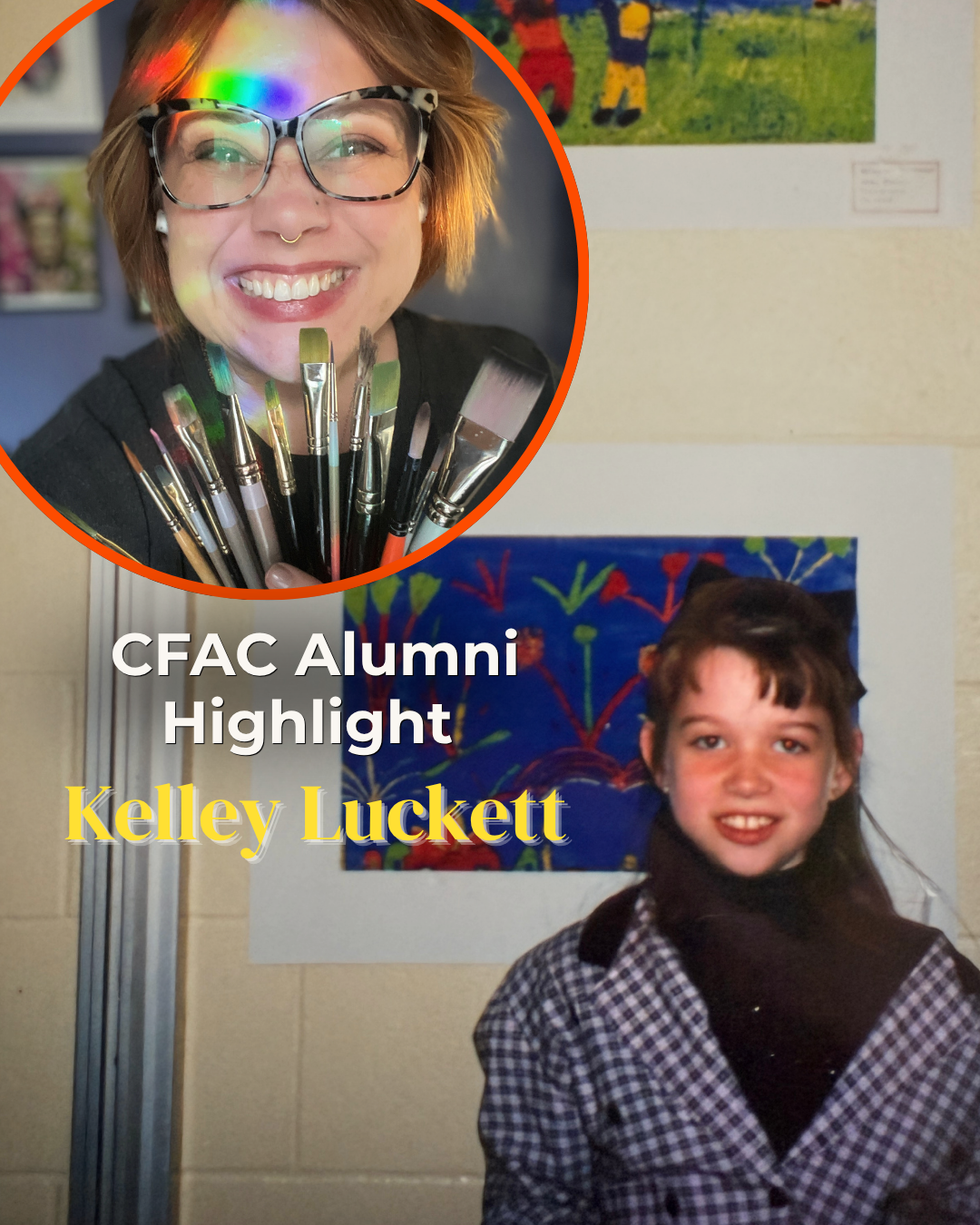
Kelley Luckett
Kelley began taking Children's Fine Art Classes around third grade in 1989. There she found a creative community, a mentor who challenged her, and the confidence to pursue a life in the arts. It was in middle school that she met Ms. Bethel, who taught her both in school and at CFAC. While middle school can be a hard time for creative kids, Ms. Bethel's classroom became her refuge where Kelley found her people - she's still in touch with several of those classmates today.
Ms. Bethel became so close with her family that Kelley's dad built her a stained glass window for her house, and they would joke that she wasn't allowed to retire until Kelley's little brother finished middle school. One of her strongest memories was that Ms. Bethel was always making art herself. While her students worked, she would often be in the back of the classroom with a colored pencil drawing of her own. She modeled what it meant to be a lifelong artist.
Ms. Bethel was the first person to talk to Kelley about a career in the arts. She helped her apply to Manual High School’s Visual Art Program, introduced her to art therapy, and Kelley still remembers her laugh and smile to this day. After many creative career pursuits, Kelley now works in prevention at the YMCA and is a practicing artist represented at Revelry Gallery.
"I honestly don't know if I would be the artist- or the person- I am today without her" - Kelley Luckett
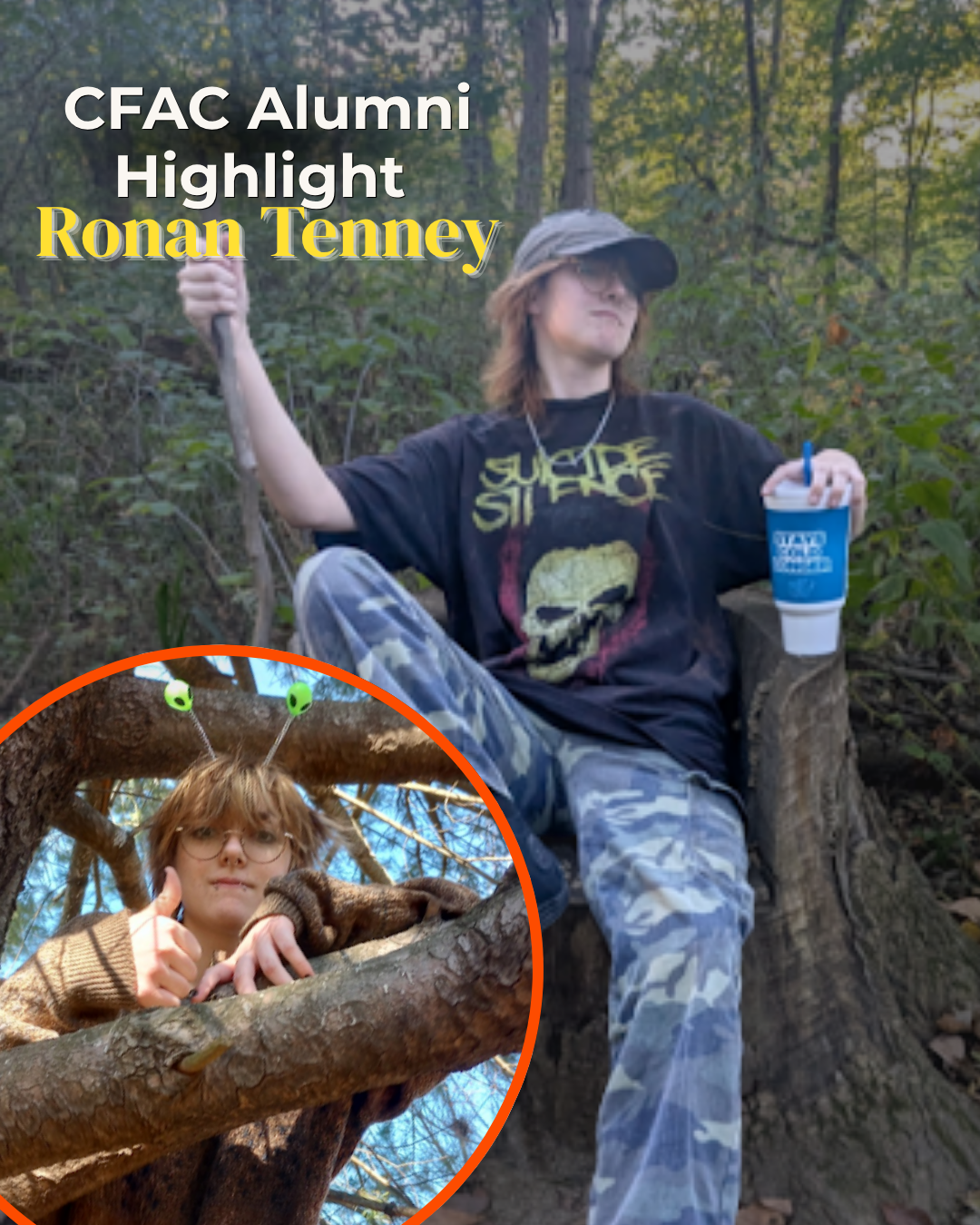
Ronan Tenney
Ronan attended Children's Fine Art Classes from 2023 through 2026, and what stands out most isn't a single teacher or project, it's the community. He made close friends in class, friendships that carried past the classroom, including one group that kept meeting up over the summer just to draw and talk in the park.
CFAC gave Ronan more than technical skill. It helped him come out of his shell, meet other young artists, and start thinking like a working artist, learning how to present work professionally, price a piece, and build relationships with artists across Louisville. Participating in LVA's events and end-of-year art shows connected him with people who offered real advice and pulled him closer into the city's art community.
This fall, Ronan heads to Ulster University in Northern Ireland to study Marine Science. He's expecting to receive his Irish citizenship soon, with hopes of eventually making a life there. Using his degree, Ronan plans to work in the conservation of bogs, marshes, and coastal life, a very different field from art, but one he credits CFAC with helping prepare him for.
His advice to a young student considering CFAC: try it. It's a good way to meet new friends, and it will help prepare you for a professional art career.
"CFAC brought me even closer to the art community in Louisville and helped me meet amazing people who gave me useful advice." - Ronan Tenney
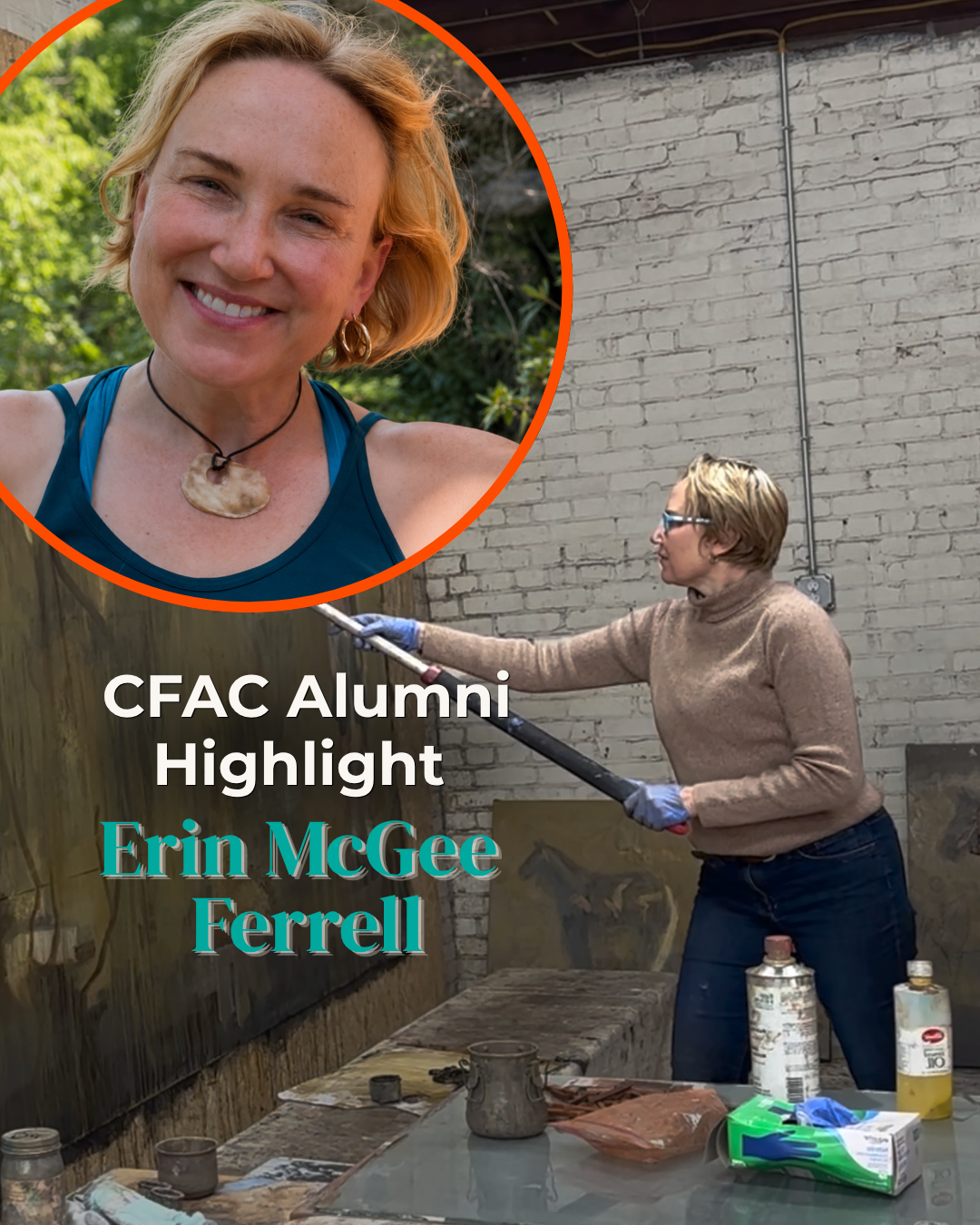
Erin McGee Ferrell
Erin began Children's Fine Art Classes in 1986, while attending the Brown School, after a friend invited her to try and Saturday class. Her teacher, Marsha Guesquier told her she was a "natural colorist," comparing her use of color to Kandinksy. For a teenager, hearing that was transformative, someone had seen something in her before she could see it in herself.
Erin continued CFAC through high school and went on to study painting at Mount Holyoke College, then pursued postgraduate work in Philadelphia and studied art in Italy and West Africa. Her career has taken her across the world, including exhibitions in South Korea and Bahrain and teaching in Saudi Arabia.
Today, Erin has returned to Louisville as a professional painter represented by Garner Narrative, Cross Gate Gallery, and Washington Gallery, with work headed to Amsterdam this fall. She still protects a Saturday studio practice - a rhythm that started in that first CFAC classroom nearly forty years ago.
"Their belief in a child can change the direction of an entire life. I know this because it happened to me." - Erin McGee Ferrell
Ian Kimbell
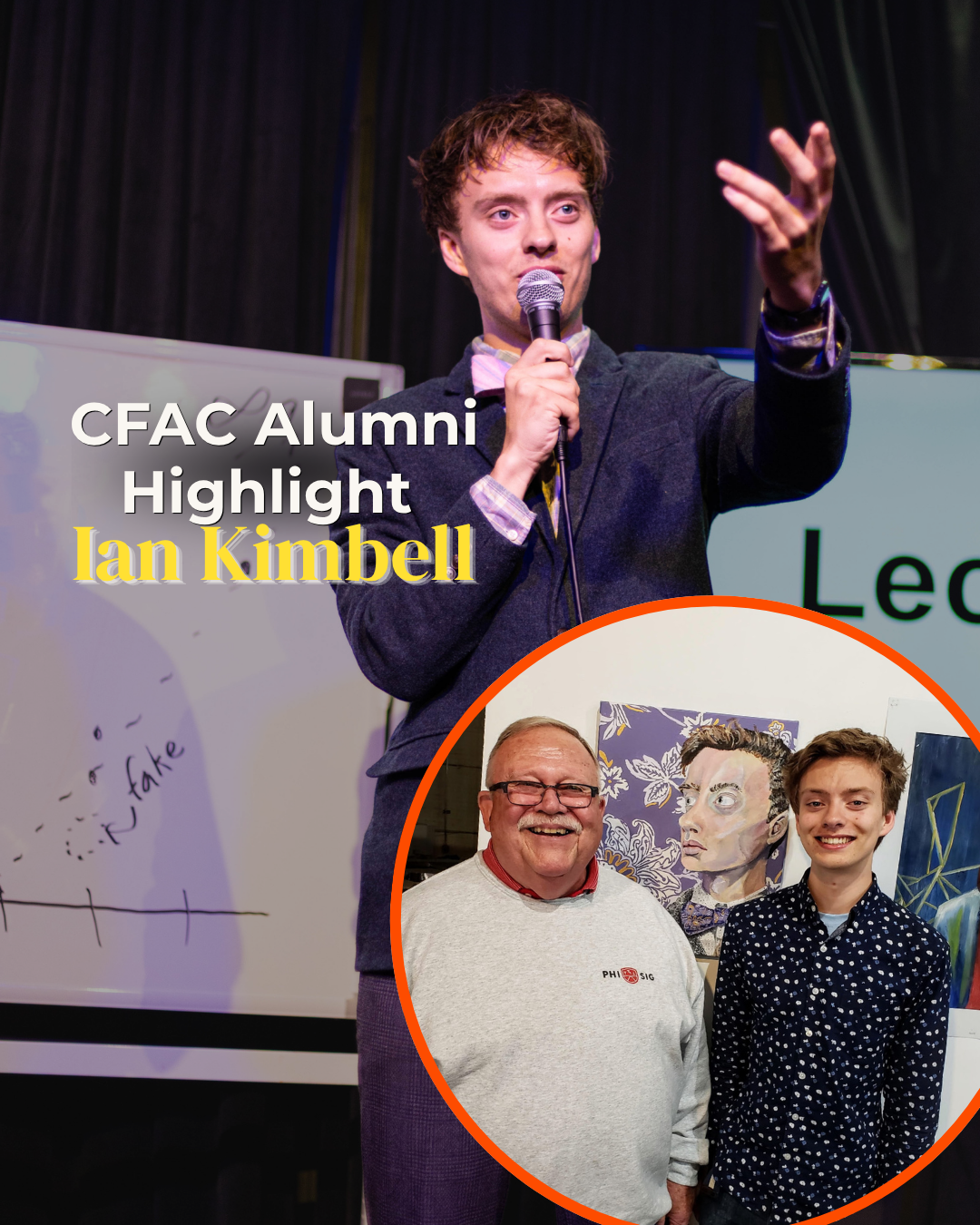
Ian attended Children's Fine Art Classes from fifth grade all the way through high school, first in after-school classes at Scribner, later in Saturday classes at IUS. The end-of-class shows were always a highlight, along with the quiet satisfaction of finishing a piece he'd worked hard on.
His teacher, Mr. Dean Mistler, taught him for years and watched him grow as an artist. One early lesson has stuck with Ian ever since: working on a self-portrait with a brown background, he reached only for brown oil pastels, until Mr. Mistler pointed out that the brown was really made up of blues, yellows, and reds. It changed the way Ian saw color, and it taught him to look closely, at art and at his own work, before calling anything finished.
After CFAC, Ian went on to study physics at Harvard. Today, he teaches physics and math in Los Angeles and performs comedy on the side, an unexpected path that still leans on the skills CFAC gave him. He still draws as a hobby, and the habits of paying attention to detail and critically analyzing his own work have followed him well beyond the art room.
Ian's advice to a young student considering CFAC is simple: go for it. You'll work on interesting projects and see art in a new way.
"Mr. Mistler showed me how to truly analyze my work and completely changed how I saw color." - Ian Kimbell
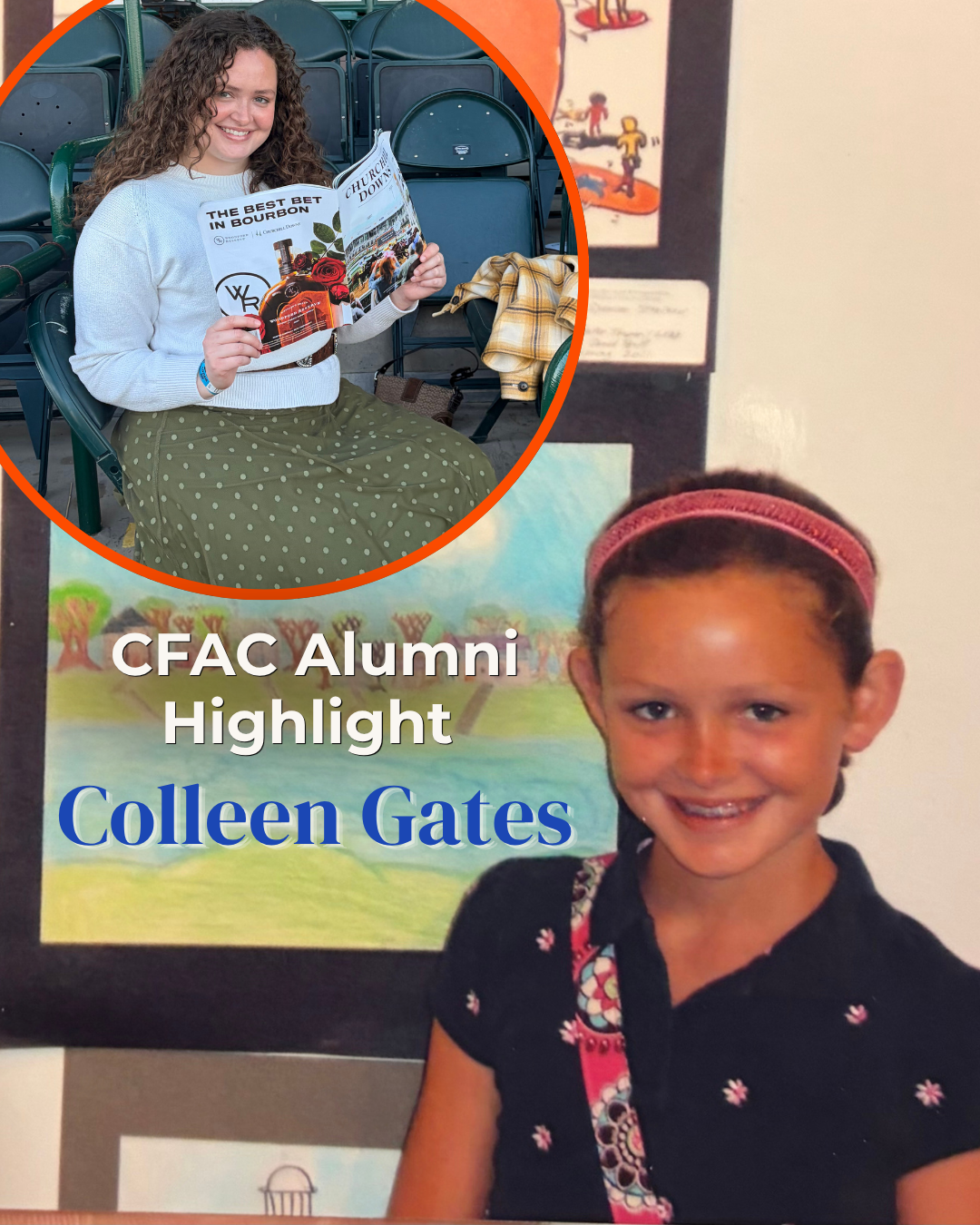
Colleen Gates
Creativity was always a part of Colleen's life. In third grade, her St. Albert the Great art teacher, Ms. Mimi, recommended her for Children's Fine Art Classes. While excited, Colleen remembers feeling a bit of imposter syndrome, questioning whether she was a "real artist." Through years of CFAC classes, she gained not only technical skills but the confidence to see herself as an artist and embrace the vulnerability that comes with sharing creative work.
She notably remembers being introduced to many new art forms that she had never heard of before. This expansion paired with her teachers encouragement to display art that is less than “perfect,” are some of the defining moments from her time in CFAC.
That foundation inspired Colleen to pursue a degree in Arts Administration at Bellarmine University, spend three years teaching art, and build a career supporting the arts through development and marketing at Louisville Visual Art. She is currently pursuing a master's degree in Arts Administration at the University of Kentucky. Throughout her journey, she has carried forward one of the most valuable lessons she learned through art: that failure is not the opposite of success, but an essential part of the process.
“CFAC challenged me to see failure as a strength instead of weakness and to use my mistakes as opportunities to come back stronger.” -Colleen Gates